The Art of Teamwork vs. A One Man Wrecking Crew.

Basketball is more than just a sport; it is a cultural phenomenon that has shaped communities and inspired millions around the globe. Throughout its history, certain players have not only excelled on the court but have also transformed the way the game is played and perceived. This blog post will explore some of the most unforgettable basketball players who changed the game, highlighting their unique contributions and the legacies they left behind.

In the 60’s and 70’s, basketball was a battleground of ideas. The rivalry between Wilt Chamberlain and the Philadelphia Warriors versus the Boston Celtics wasn’t just a story of one team versus the other, it was a clash between philosophies. One side was highlighted by the elite Wilt Chamberlain, a man who could single-handedly beat a team on his own. He was a freak of nature unlike anything seen in basketball at the time. On the other side of the court stood the Boston Celtics, a dynasty that wasn’t defined by one player but a collection of talent. A mixture of Bill Russell’s defense, the court wizardry from Bob Cousy, the scoring sorcery of John Havlicek and the dazzling instinct of their coach Red Auerbach—this was the orchestration behind their NBA-record 8 championships in a row.
Wilt Chamberlain was seen to some as an otherworldly being. He stood over 7-feet tall and was rumored to have a 50-inch vertical. He was viewed as the best player on the floor every night, and gravitated the attention of every player on the opposing team. He once scored 100 points in a game, and on an average night, he scored 50; both of which are NBA records. Wilt was a human highlight reel, an unforgettable spectacle for fans of the sport during this era. The Warriors’ whole team revolved around Wilt. Teammates would pass him the ball and get out of the way because they knew that was the best chance of winning. He wasn’t just the best player on the team, he was the team.
The Celtics were more balanced. The team didn’t need to rely on just one player to do everything for them. The power of the team was evenly distributed, with each player playing a significant role in their championships. Bill Russell anchored the paint on offense and defense, while Sam Jones scored in the clutch, and Bob Cousy handled and controlled the offense. All the players fed off of each other, and were able to act as a seamless symphony.. In their matchups against Wilt, they had strategies to neutralize him. They would run fast in transition, bombard him with double teams, and they would exploit the moments when the singular sledgehammer was faltering. Every night these teams went against each other, it was a fierce rivalry, a clash of philosophies.
Basketball is a team sport; players need each other to succeed. Even great players need passers to get them the ball, defenders to stop the scoring, and role players that do the things that don’t show up on the box score. Even though Wilt was putting up monstrous statlines, he was operating on the edge of what one person can actually do, while the Celtics were built to highlight the success of what groups can do together.
Wilt was dominant, but you could say he almost became too dominant. The more powerfully he played, the more predictable the strategy of him and his team became. Other teams would structure their whole defense around him; they could swallow him scoring fifty points if that meant that his teammates were nullified. Meanwhile, Boston’s strategy was the opposite of predictable; they could have any player, on any given night, give you 30 points and something. They would press full-court and pass the ball around so much that it would make your head spin.They were resilient as well. If someone like Bill Russell had an off-night, somebody else would be there to pick up the slack, but if Wilt had a bad night the whole ship would go down with him..
In the end, the Celtics’ ideology prevailed. They won 11 championships in the span of 13 years.
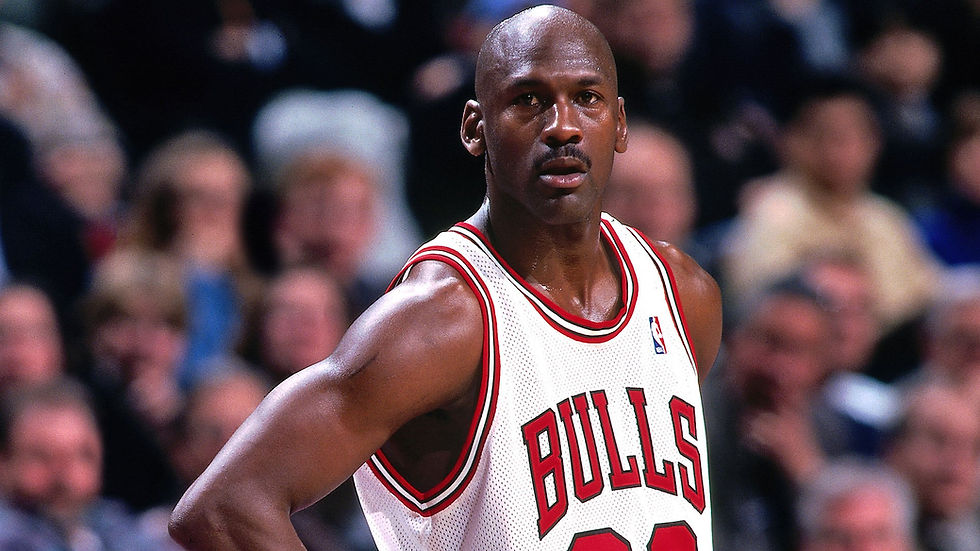
But the debate their rivalry with the Warriors sparked—between supreme talent and collective excellence—has continued through basketball for decades. For example, Michael Jordan’s Bulls: they realized they couldn’t win a championship with just Jordan, so they drafted Scottie Pippen, Dennis Rodman and Phil Jackson’s triangle offense, and sure enough, they achieved six titles across two three-peats, a feat only few in history can claim. Later, Lebron James and his short-handed teams. For seasons he struggled to reach the mountain top of the NBA, but once he was surrounded by an adequate system he thrived. Of all these teams, Steph Curry and the Golden State Warriors might be the closest descendants of the Celtics, as they were built on spacing, trust and ball movement, rather than individual supremacy.
Wilt Chamberlain was an anomaly during his time, but it taught the league a lesson: a superstar can actually be a team’s downfall.
Although Bill Russell and Wilt Chamberlain are remembered as the fiercest of rivals, their clash was just a part of the story. On the court they clashed relentlessly; however off the court, they shared a respect and friendship for each other that wasn’t easily seen to the public. They were bonded through their shared experiences as African Americans during the height of the civil rights movement, and their encounters with racism. They spoke very fondly of each in interviews; with Wilt describing a time where” he’d [Bill Russell] come past my house on Thanksgiving, eat my food, sleep in my bed, and then next day whip my butt” revealing the humorous interactions they had. Their friendship, which was forged through competition, reveals the layer of humanity beneath their mythical strength, showing how even the fiercest of rivals can recognize greatness in one another and form ever-lasting bonds.


Comments